Recovery-Friendly Workplaces: Supporting Employees and Strengthening the Workforce

For many people in recovery from substance use disorder, returning to work is a critical part of rebuilding stability and purpose.
That’s where the Recovery Friendly Workplace movement comes in. Across the country, employers and community organizations are working together to create workplaces that support recovery while strengthening the overall workforce.
A Recovery Friendly Workplace is an employer that intentionally creates policies, practices, and workplace culture that support employees affected by substance use disorder, including those in recovery and those seeking help. This might include training for managers, flexible policies that allow employees to access treatment, connections to recovery resources, and efforts to reduce stigma around addiction.
Vermont’s Recovery Friendly Workplace initiative, led by VAMHAR, helps employers build supportive environments for people in recovery through policy guidance, training, and workplace recognition.
While these efforts are often framed as compassionate workplace practices, they are increasingly recognized as a practical workforce strategy as well.
Vermont’s Recovery-Friendly Workplace Initiative
In Vermont, the Recovery Friendly Workplace initiative is led by the Vermont Association for Mental Health and Addiction Recovery (VAMHAR). The program helps employers implement recovery-supportive policies, provides training and technical assistance, and recognizes workplaces that commit to creating supportive environments for employees in recovery.
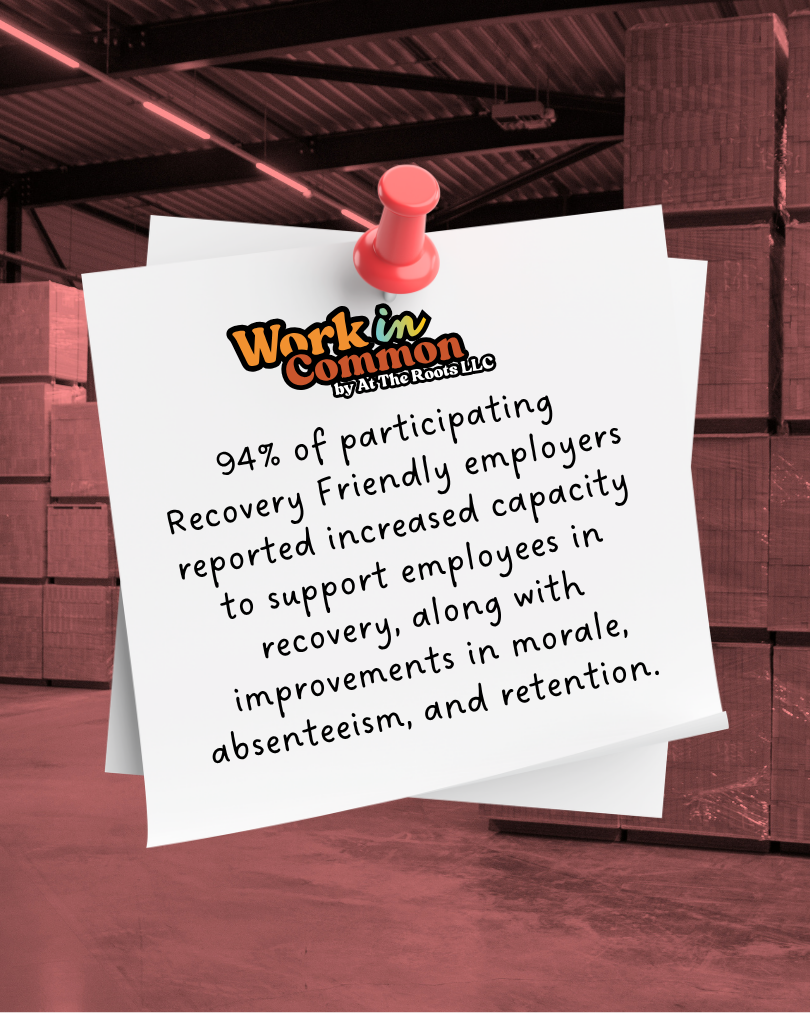
The initiative builds on a pilot program involving 18 Vermont employers over a two-year period, and early results have been promising. Ninety-four percent of participating employers reported increased capacity to support employees in recovery, along with improvements in morale, absenteeism, and retention.
Just as importantly, employees noticed the difference. Seventy percent of employees in recovery said they felt more comfortable asking for help after their workplace joined the program. (VermontBiz, 2025)
These findings highlight something advocates have long emphasized: workplace culture matters. When employees feel supported rather than stigmatized, they are more likely to seek help early and stay connected to both recovery and employment.
A Growing National Movement
Vermont’s initiative is part of a broader national effort to create recovery-ready workplaces. Programs like this first gained momentum in New England and have since spread across the country as employers and policymakers recognize the connection between recovery, workforce participation, and economic stability.
The need is significant. An estimated 30 million U.S. workers live with substance use disorder, meaning most employers will encounter the issue in some form within their workforce. (CDC, 2024)
When left unaddressed, the impact can be substantial. Workers struggling with addiction take nearly 50% more unscheduled days off and have turnover rates about 44% higher than the general workforce, creating major costs for employers. (HRCI, 2025)
Recovery-friendly workplace initiatives aim to change that dynamic by supporting treatment, reducing stigma, and helping people maintain stable employment.

Recovery as a Workforce Strength
Research increasingly shows that when people are supported in recovery, the benefits extend to employers as well. Workplace recovery programs have been shown to deliver a return of $2–$4 for every $1 invested, largely through reduced turnover and improved productivity. (Common Good Vermont, 2025)
More broadly, recovery-friendly workplaces expand the available talent pool at a time when many industries are struggling with labor shortages. By creating policies that support recovery, employers can retain experienced workers, strengthen workplace culture, and contribute to healthier communities.
For organizations like At The Roots LLC, these ideas are not just policy concepts but part of everyday practice. Much of our work is grounded in lived experience, and that perspective shapes how we approach collaboration, leadership, and support within our team. Creating a workplace where recovery is respected, understood, and supported has always been central to our culture.
We share these efforts not because there is a single model every employer should follow, but because the broader movement toward recovery-friendly workplaces is gaining momentum. When workplaces create environments that support recovery, they help individuals rebuild stability while also strengthening teams, organizations, and communities.

Lacie Weatherholt
A true cycle breaker and perhaps the most organized among us, she brings a grounding but kick-ass presence to her role as our Community Engagement Coordinator.
Want an easy, recovery-friendly option to offer your employees for FREE?