
Recovery coaching is meaningful work built on practical skills, strong ethics, & compassionate care.
As a Certified Recovery Coach Professional, I have the privilege of using my lived experience to support people in their recovery journeys. As more people learn about peer support and recovery coaching, I thought I'd share a little about what makes this work so meaningful to me. There are plenty of reasons I love being a recovery coach, but here’s what made it to the top three:
1. Watching People Build the Life They Want
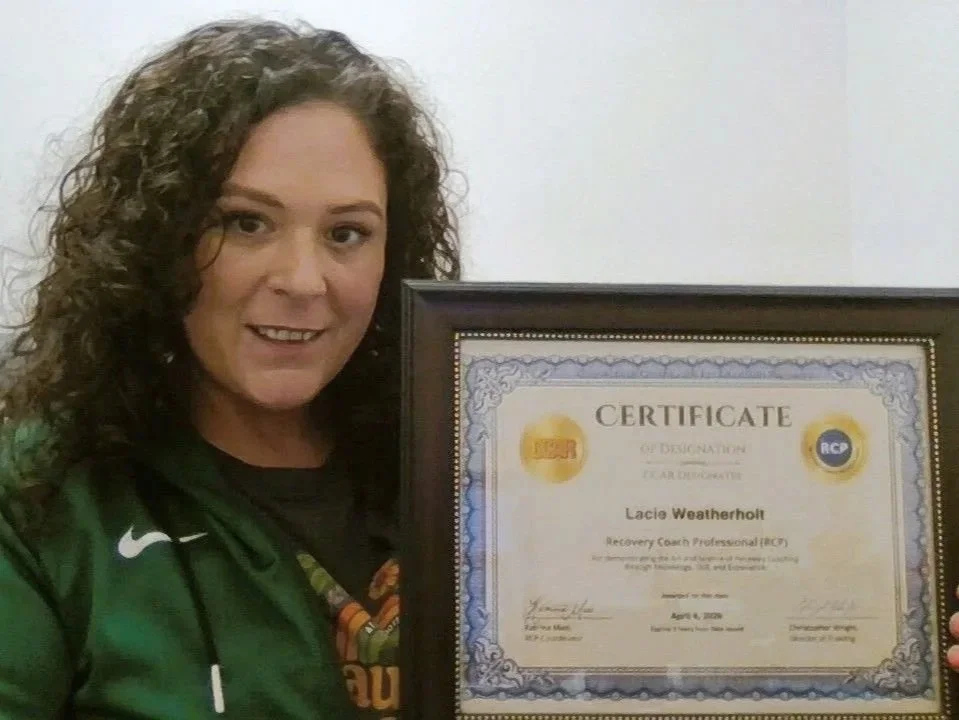
In 2026, Lacie Weatherholt completed her full Recovery Coach Professional designation - a milestone that reflects both her hard work and her commitment to helping others build recovery on their own terms.
One of the most important parts of overcoming substance use and mental health challenges is purpose and connection. People in early recovery have often spent so long in survival mode that there hasn't been much room for purpose or connection, and it is a privilege to witness someone begin reconnecting with themselves. It starts small, but eventually, I see confidence replace uncertainty.
No two recovery journeys look the same, and I think that's part of why this is one of my favorite parts of the job. People never stop surprising me with their resilience, creativity, and ability to find solutions that fit their own lives. It never gets old watching someone build the life they want and deserve.
2. I Don't Have to Have All the Answers
Recovery coaching is about curiosity, not expertise.
There are not many jobs I’ve worked at where it is acceptable to say, “I don’t know,” but recovery coaching is all about figuring it out together. I love that I don’t have to be an expert, but get to look to the participant as the expert in their recovery. Sometimes my role looks like being on your team, and sometimes it looks like cheering you on (loudly) from the sidelines.
It definitely takes the pressure off! But my favorite part of not needing to be the expert is that I get to stay curious. I'm a lifelong learner when it comes to people and life, and recovery coaching feeds that curiosity every day. Every person teaches me something new, and I genuinely love that no two conversations are ever the same.
This mindset has made me a better recovery coach, and probably a better person.
3. My Past Gets to Mean Something
I'm not someone who believes everything happens for a reason. In fact, if I could go back and erase some of the trauma I've lived through, I would do it in a heartbeat.
But there is comfort in knowing difficult experiences can be used to help someone else feel less alone. If I can help someone going through the same, then it’s not for nothing, you know?
And getting to be a source of hope for someone else is an honor I never take lightly.
Recovery coaching is equal parts challenging and rewarding. It's not about having a concrete solution to every problem, but being curious, staying open-minded, and meeting people exactly where they are. Sometimes that means noticing progress, sometimes it means sitting with uncertainty, and sometimes it simply means reminding someone they don't have to do recovery alone.
Interested in becoming a recovery coach?
Join us for an upcoming Recovery Coach Academy© - CCAR’s signature 5-day training for people who want to support others in or seeking recovery from addiction.
This immersive training introduces the core skills of recovery coaching, including how to build trust, listen with intention, support without taking over, and walk alongside people as they define recovery for themselves.
Recognized across the United States and beyond, Recovery Coach Academy© helps prepare participants to serve as peer recovery coaches in a variety of community, treatment, healthcare, and justice-related settings.